Virgil Trucks: Throwing Heat was Fire’s Department
 By Ronnie Joyner
Trivia question — who was the last 20 game winner for the St. Louis Browns? Well, technically the answer is probably Ned Garver with his amazing 20-12 season for the 1951 team. Bob Turley, who toiled in 10 games for the ’53 Browns, won 21 with the 1958 Yankees, so he might also qualify as the answer to the question.
Some, though, may consider a hard throwing fellow from Birmingham, Alabama, as the last true Brownie to win 20 games. True, he didn’t post all, or even most of his 1953 wins with the American League boys from St. Louis, but he did notch a quarter of his 20 wins with the Browns before a June trade sent him to better fortunes with the Chicago White Sox. And, don’t forget, 1953 was the last season for the Browns before they left tow to become the Baltimore Orioles in 1954. So, for the sake of this article, we shall go with the fireballer from Alabama as the answer to the question posed: Virgil “Fire” Trucks — last 20-game winner for the Browns.
Trucks’ baseball foundation was laid early. His father was a sandlot pitcher whose teams sometimes featured three of his boys, including Virgil, in the outfield. “My dad could have played pro ball,” recalled Trucks from his home in Birmingham, “but at that time they weren’t paying any money and he was making more money at his job than he would have going off to play pro ball.” There were 13 children to feed in the Trucks home, and while this made for tight times in the family, it was great for playing ball. “Nine boys and four girls — I guess my dad wanted to raise his own baseball team,” Trucks said laughing. “There was always someone to play ball with.”
With no major league baseball nearby, Trucks followed the Barons of the Southern League in his early days. He also liked to watch negro league teams play when they came through Birmingham. Young Virgil, in an amazing brush with his own destiny, saw the already legendary Satchel Paige pitch a couple of times. “I remember sneaking onto Rickwood Field in downtown Birmingham a couple of times to see Satchel pitch while he was still in the negro leagues,” Trucks recalled. “When nobody was looking I would just slip in. I think that sometimes the people at the gate would see you there and know that you didn’t have any money for a ticket, so they’d look the other way. I never imagined at that age — 10 or 12 — that one day I would be pitching against him, as well as playing on the same team as him years later.”
By the age of 12 Trucks was playing American Legion ball with kids much older than him. After high school he played semi-pro ball in the textile league in Shawmut, Alabama. It was there that Detroit scout Eddie Goosetree signed Trucks to a minor league contract as an outfielder for a $100 bonus. It was also in that textile league that a catcher named Brunner Nix converted the strong-armed outfielder into a pitcher — and his pitching was turning heads. “There was an umpire from the Alabama-Florida League who had seen me play in the textile league and he told the people in Andalusia about me,” said Trucks. “Andalusia asked me to come down and said that they would pay me $35 a game that I pitched. If I didn’t pitch at all they said they would still give me $35 and pay for my roundtrip ticket. Well, I had nothing to do so I went down there. I won two games in the playoffs and we beat Union Springs for the 1937 Alabama-Florida League championship.”
Andalusia approached Trucks after the season about signing a contract with them. The fact that Trucks was already under contract with Detroit didn’t discourage the eager teenager, though. “I thought about the fact that I was signed to Detroit for 1938, but then Andalusia offered me $500. Well, being an 18-year old kid I’d never seen $500 before — I could live two years off of that! So,” he said incredulously, “I signed.” The situation came to a head in the spring when both teams expected Trucks to report for camp (the Tigers wanted Trucks to play with their affiliate in Beaumont). He solved the dilemma by not reporting to either team and returning to his textile league team. It was there that he was courted to sign by a third team. “Well, the Atlanta Crackers, managed by Paul Richards, were coming through town on their way back to Atlanta to open the Southern League. They played my cotton mill team in an exhibition game and we beat them 2-1. I pitched six shutout innings. Richards tried to sign me on the spot, but I told him I belonged to somebody else,” Trucks said with an ironic chuckle. The whole mess was finally untangled by Trucks’ textile mill team manager, Bob James, who determined that Detroit had pigeon-holed Trucks’ contract which gave Andalusia the rights to the flamethrower. “So, I reported to Andalusia and got there just in time to pitch opening day, won it, and went on from there,” Trucks said nonchalantly. “That’s the year I set the record for most strikeouts in organized baseball — 420. I struck out 30 more in the playoffs — 15 in each game — which they didn’t add to the 420 season total.” Witnessing firsthand the heat that Trucks was throwing, a sportswriter with the Birmingham News by the name of Jack House dubbed the kid “Fire” — a moniker that sticks with Trucks to this day.
Detroit, upon hearing of Trucks’ super-human feats down in the Alabama-Florida League, dispatched Goosetree to Andalusia to re-sign Trucks pronto. They told Goosetree that if he didn’t re-sign the right-hander then he’d be out of a job. “When Eddie got there he offered the Andalusia club $10,000 for me, and that was a lot of money back then,” said Trucks, still amazed. “I wouldn’t see any of that money, but they sold me back to Detroit. They didn’t want to do it, but when I went back to visit years later they told me that the $10,000 paid off the lights that had been purchased for their field — so I bought their lights!”
Trucks pitched in Beaumont in 1939-40 and moved up to Buffalo in 1941. Later that year the 22-year old got his big league call up. “At the end of the season the Tigers called me up, and I stayed up until I retired,” he said, “or until they took the uniform away from me! I didn’t really ever retire. I was up with Detroit for three or four weeks in 1941 and got into in one game in a relief appearance — that’s all — never started a game. That one appearance taught me something that never happened to me again after that. We were playing against the White Sox and Joe Kuhel stole home against me. There was nobody out and Kuhel was on third, so I was in a full windup. He knew I was a rookie in the major leagues and not paying any attention to him, and he stole home. I don’t know if Joe had that much speed, but you don’t have to be fast if you have intelligence.”
Trucks was the real deal and won 30 games for the Tigers from 1942-43. Both years his ERA was well below 3.00 and deserving of even more victories, a re-occurring theme in his years in Detroit. Just as he was really gaining career momentum, World War II interrupted and Trucks spent 1944-45 in the service. “After the 1943 season I went into the Navy and served in the South Pacific,” Trucks remembered. “First I went to the Great Lakes Naval Training Station. Mickey Cochrane was the manager of the Navy team there and that’s why I wanted to go there. There were a lot of good ballplayers there. We played 52 games that year — won 50 and lost two.” Following the season at Great Lakes, Trucks headed out to Hawaii to play in the Army-Navy World Series organized by baseball enthusiast Admiral Nimitz. The Navy dominated the Series winning nine, losing one and tying one. “Admiral Nimitz threw out the first pitch for the opening game which I pitched and won 5-0. He congratulated me, but that was about all. He wasn’t going to give a little seaman first-class too much attention no matter how hard I could throw the ball,” said Trucks.
Red tape kept Trucks in the service a for few more months than necessary, but he got out just in time to have an impact on the tight American League pennant race of 1945. “I joined the Tigers in St. Louis for the last three games of the season against the Browns,” Trucks recalled. “We had to win one of the games to win the pennant. Washington was already up in Detroit waiting for us in case we didn’t win a game against the Browns. In that case, we’d end in a tie and have to play them in a playoff. Well, I started the game and pitched six innings and was winning the game 2-1 when I went out. Newhouser came in because O’Neill really wanted to preserve that win, but the Browns went ahead of him by about three runs. It went on to the ninth inning and that’s when Greenberg hit that grand slam to win the game.”
Meanwhile, the Cubs had locked up the National League pennant and were now ready to square off against the Tigers. “I started the second game of the World Series against the Cubs and pitched a complete game for the win,” Trucks said. “It was a real thrill to be in that World Series in 1945, I just wish I could have joined the team a little earlier and been in a little better shape. The club voted me a half World Series share after we won. Some of them were very funny about their money, and they didn’t make very much back then. I only pitched in three games in 1945, and getting a World Series share was a lot of money at that time — a full share was $6,600.”
1946 saw Trucks pick right up where he had left off before the war as he won 14 ballgames. He won 10 in ’47 and 14 in ’48 before hitting it big with 19 wins in 1949. In 1950 Trucks faced the first real adversity of his career when he came up with a sore arm and missed most of the season. He showed no ill effects in 1951 when he came back with 13 wins. It was that year that Trucks had a front row seat to baseball history at Sportsman’s Park in St. Louis. “I was on the bench when we played the Browns in the game where Gaedel pinch hit,” recounted Trucks. “We just thought it was another one of Veeck’s playthings — nobody thought he was going to get into the batter’s box and hit! Gaedel came walking up swinging four little souvenir bats — the kind they give away at the ballgame. When he finally stepped into the batter’s box, our manager, Red Rolfe, called time and went up to the umpire and said, ‘You can’t put that guy in to hit.’ That’s when Zack Taylor, the Browns manager, pulled out a contract signed by Will Harridge, President of the American League. So Gaedel stepped back in the box. Our pitcher, Bob Cain, later told me that Eddie said, ‘Just get the ball over — I’m gonna murder it!’ Cain threw four straight pitches that would have been strikes on anybody else, but they were too high for Gaedel. So he went to first and they put in a runner for him, and that was the end of his career.”
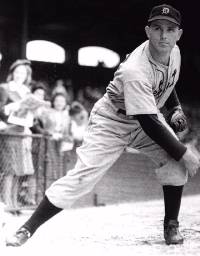
The next year was a real paradox for Trucks. While he pitched well enough to have an ERA of only 3.97, his record ended up at 5-19. It took a temporary self-imposed exile to the bullpen to keep him from losing 20. “I went to Hutchinson, the manager, and told him I wasn’t going to lose 20,” said Trucks. “I hadn’t won 20 yet and I wasn’t going to lose 20 before I did! So he let me go to the bullpen and stay down there. That was just a lousy ballclub. Even the Browns were a better defensive club than Detroit was.” The true paradox, though, came in the form of two no-hitters that the power-pitching Trucks threw in the midst of his worst big league season. “I threw two no-hitters in 1952,” remembered Trucks. “I threw four of them in the minors — two in my first year with Andalusia. When I threw the no-hitter against Washington in Detroit, Porterfield didn’t give up a hit until the seventh inning. It was nothing to nothing when we went into the bottom of the ninth. With two men out and two strikes on Wertz, he hit a home run. The dugout there was shallow, and when he hit that home run I jumped up and hit my head. I saw a few stars, but I staggered out to home plate to meet him.”
“The second one was at Yankee Stadium. There was an odd call in the third inning on a ball that Pesky fielded. The umpire called Rizzuto safe on the play at first, and we all argued that Pesky threw him out. I looked up at the scoreboard and they had put an error up on the play. Not that I’m thinking about a no-hitter at that early point of the ballgame, but when I came back out for the fourth inning I saw that they had taken the error off and put the hit back up. Apparently Drebinger, the official scorer, thought the ball got stuck in the webbing of Pesky’s glove and therefore ruled it a hit. Well, that hit stayed up on the scoreboard until the seventh inning. We picked up a run in the top of the seventh when Dropo doubled and Souchock got a base hit to drive him in. At the same time, as I understand it, the guys up in the pressbox were getting on Drebinger about the hit. They said he was wrong about it and that Pesky bobbled the ball before he threw to first. So Drebinger called Pesky down on the bench and asked him about it. Pesky told him that the ball did not get stuck in the webbing of his glove — he just let it roll around and couldn’t get a grip on it. So then they changed it back to an error. They announced it on the P.A. system when I was out there warming up and even the Yankee fans applauded the decision. But, I wasn’t really even thinking about it then — I was having enough trouble just winning, let alone pitching a no-hitter. So I went out and got them out in the bottom of the seventh. I got them out in the eighth.”
“In the ninth I had Mantle as the leadoff hitter,” Trucks continued. “I heard Stengel yelling from the dugout, ‘Drag bunt — don’t let him pitch a no-hitter!’ Well, I struck him out and I popped up Yogi. Then Bauer hit a line shot to Federoff. He had to catch it — self defense — he couldn’t get out of the way of it. It was a one-hopper right at him and Bauer was thrown out at first before he got out of the box. That was it — we won 1-0 and I got a great ovation from the Yankee fans when I walked off the field.”
No-hitters aside, the 1952 season was more about hard-luck losses than anything else for Trucks. Another example came on August 6 when Trucks locked horns with the old man that he used to sneak into Rickwood Field to watch — Satchel Paige. “I pitched an exceptionally good 12-inning ballgame against Satchel that day,” Trucks reflected. “The only problem was that he pitched exceptionally good, too, and won it 1-0!” It turns out that Satch got three of his 12 wins in 1952 against the Tigers — all games that Trucks started. “Satchel was still an amazing pitcher, even at his age,” marveled Trucks. “I never saw him throw a curve ball. He threw a little spinning pitch that spun like a curve ball, but it didn’t break off like a real curve ball.” The Tigers, like their ace, bottomed out in 1952 with a miserable 50-104 record and traded Trucks in the offseason… to the Browns who’d won only 60 in ’52.
“I was in the hospital recovering from gall bladder surgery when I found out that Detroit had traded me to St. Louis,” remembered Trucks with vivid irritation. “I picked up the paper and read that I had been traded along with Hal White and Johnny Groth. I was feeling bad enough without having to read it in the headlines of the paper! But I really liked Bill Veeck because he was for the players. As a matter of fact, he was the only man that ever told me in person that I was traded. Every other time I found out in the papers.” The trade Trucks is referring to came a mere six months after the Browns acquired him. “It was an off-day when I found out that the Browns had traded me to the White Sox,” Trucks went on. “Bob Elliott and myself, along with a couple of other guys, went over to a little tavern to have a sandwich. Veeck was looking for me — he had called my apartment trying to find me. Well, he finally found me and asked me to come to his office. When I got there Bob Elliott was already there and that’s when I found out that the Browns were selling me and Bob to the White Sox. Veeck told me he didn’t want to let me go, but he had to do it to meet the payroll. He got $100,000 and a couple of other players.”
Trucks’ recollections of his brief time in St. Louis did not include any of Veeck’s blockbuster antics, but he did recall a day in which they had fun at the expense of Veeck’s baseball clown, Max Patkin. “Max was coaching first base,” Trucks said with a devious laugh. “He was down there going through all those gyrations and dancing. Me and Jack Homel, our trainer while I was with the Tigers, got a big tub of water and ice — we decided to help Veeck out with the show that day. We got it real cold by stirring it for about three or four innings. When Max wasn’t looking we snuck up on him and threw that tub of ice water on him. Boy was he mad! The water made it real muddy in the coaches box and he threw mud at us for the rest of the game.”
Although with the Brownies for only a short time, Trucks made some fast friends. “Courtney was as good a little catcher as you’d ever find,” he said warmly. “They didn’t call him Scrap Iron for nothing, you know. I remember a game against the Yankees when they had McDougald on third in the ninth inning. There was a ground ball hit and the throw went home to try and get McDougald out. Well, Gil barreled over Clint and really undressed him. His hat went one way, his mask went the other, his glasses went flying and McDougald was safe, which put them up by a run. Courtney got up, gathered up his stuff and calmly said, ‘I’ll get somebody for that.’ Sure enough, he’s the leadoff hitter in the bottom of the ninth and he hit a ball off that screen. You had to be really fast to get a double off a hit like that because the ball bounced right off the screen into the outfielder’s hand. Well, Clint couldn’t run that fast, but he left that batter’s box and never let up as he went around first base. He was out by ten feet as he went into second base, but he slid hard with spikes up into Rizzuto who was covering second. He hit Phil hard right in the chest. Clint was out, but he didn’t care. Reynolds, who was pitching, went over there and hit Clint knocking him down. Clint got up and gathered up his stuff again — his hat and glasses (one shoe was missing) — and he walked off the field as happy as if he had won the ballgame. He got somebody just like he said he was going to.”
As a veteran of two no-hitters in 1952, you might have thought that Trucks would offer up some advice to the rookie Holloman as he got deep into his 1953 no-no, but that wasn’t the case. “No, I didn’t say anything to Holloman during his no-hitter,” Trucks said. “He was really pitching very good that day. There were a few good plays made in the field behind him, but it was a good, legitimate no-hitter. You have to have good plays behind you — you can’t pitch a no-hitter by yourself. Veeck gave Holloman carte blanche to go downtown and outfit his family after that. He and his wife had a little boy at the time. About all I ever got was a dozen sport shirts for pitching a shutout, which Veeck did for all the pitchers who threw a shutout. Veeck, of course, never wore a tie — he always wore those sport shirts. Us players had a dress code, though, and we had to have on a coat and tie when we got on the train. But if you were a Veeck or a Ted Williams, who also never wore a tie, you could do whatever you wanted to do.”
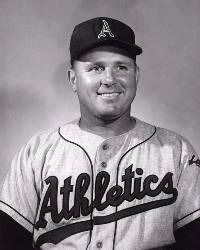
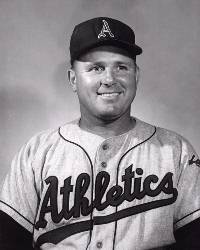
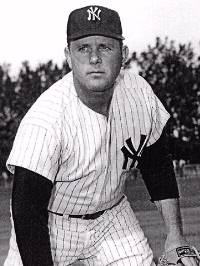
Trucks was 5-4 when Veeck dispatched him to the White Sox, and there his fortune turned around. He went 15-6 the rest of the way to nail down his only 20-win season. Trucks had another great season in Chicago in 1954 notching 19 wins and followed that with a 13-8 record in 1955. Trucks was shipped back to Detroit for the 1956 campaign where he began to transition from a starting role to relieving. He was on the move again in the offseason, though, when he was dealt to the Kansas City Athletics as part of an eight player trade. He won nine games with a 3.03 ERA on an A’s team that lost 94 in 1957. In the last move of his big league career, Kansas City sent Trucks to the Yankees on June 15, 1958.
“I remember one game when we were playing the Red Sox,” Trucks recalled. “About the seventh inning Casey called down to the bullpen for me to warm up. So I warmed up and ran out there when they made the change. I got to the mound and Casey said to me, ‘What are you doing here? I wanted Kucks.’ Trucks and Kucks sound alike, and Casey had wanted Kucks because he was a sinkerball pitcher and the bases were loaded with none out. So I said, ‘Well, I’ll go back and get him.’ Casey said, ‘No, you’ve already been announced. You gotta pitch.’ Well, I struck out the first guy and the next guy hit into a double play. After the game was over he told the writers, ‘I brought in the right guy.’ But, from then on Casey had a rule with Turner, who was the pitching coach. ‘When you call down, you say Virgil Trucks or Johnny Kucks and make them repeat it back to you.’ He never let that happen again.”
As the Yankees prepared to play the Braves in a World Series rematch of 1957, an incident happened that Trucks still recalls with some bitterness. “The Yankees took me off the roster before the ’58 Series and I was very upset about that,” he said. “So were a lot of the players, too — they didn’t like it either. They gave me a full share and a World Series ring, but I was angry. They picked up Murray Dickson with about a month left in the season and Casey felt that Murray knew the National League hitters better than I did. They still wanted me to throw batting practice, but I was going to quit. Art Richman and his brother Milt were the ones that talked me in to staying there because I was really going to walk away. So, I threw batting practice and I’ll never forget Andy Carey telling Stengel, “He’s got more stuff than any pitcher we got on the team!” I was doing it on purpose. I didn’t even want them to get a hit in batting practice.”
Trucks went to spring training with the Yankees in 1959, but at 40 years of age he had finally lost the edge that made him special. The Yankees cut him loose officially ending the big league playing days of Virgil Trucks. He wasn’t done playing yet, though, and he pitched briefly with the Miami Marlins of the International League and barnstormed with his old buddy Satchel Paige. Trucks coached with the Pittsburgh Pirates and Atlanta Braves, and scouted with the Seattle Pilots and Detroit Tigers before his retirement in 1974.
He, like many men that played in his prime, has mixed feelings about today’s brand of baseball. “Baseball is still a great game, but it’s different now — a different era,” Trucks commented. “The ball is more lively now — you can’t tell me it isn’t when a little guy like Furcal hits the ball to the opposite field for a home run. They’re all going for home runs now — even the little guys. When I played the little guy was a good hitter if he just hit singles where the ball was pitched. Guys rarely try to protect the plate and get the run in with two outs or two strikes — they still swing for the home run. There are a few who will still try to go to the opposite field for a base hit, but there are not many of them. Of the guys pitching today, I’d say Clemens pitches the most like me. Schilling, too.”
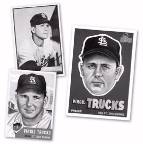
“The most money I ever made in a year was $38,500, and that was when I was finishing up. I made more money signing 3,400 cards for Upper Deck this year than I did in my first two years in Detroit! It’s a new card of me with the Yankees that they just came out with. They put Pride of New York on the card and I was only there half a year!” he laughed. Pride of the Browns probably wouldn’t have sold many cards.
“Looking back there might be a few things I would change — mostly my attitude,” Trucks said. “I was rebellious and I didn’t want anybody getting a hit off me. I was like Sal the Barber — I’d come close to you. No one ever hit two home runs off me in one ballgame because they knew where I was going to pitch them the next time they came up. Either inside or further inside. But, I don’t think you could do any better than playing baseball for a living — even more so today because of the money — but I’m glad I played when I did. I played for the fun of the game, the love of the game, the love of the fans — I get at least one letter a day from fans — and things like that. That was the best part about it.”