The Summer of 41
 THE SUMMER OF ’41
By Dale B. Smith
When asked to remember the 1941 baseball season, many fans can tell you that it was the year that Yankee outfielder Joe DiMaggio had his 56 game hitting streak. Others will remember it as the year Red Sox outfielder Ted Williams hit .406. Some will tell you it was the start of the Yankee/Dodger World Series rivalry. Yet, if you asked two gentlemen at the Society’s October 2000 Reunion, the 1941 season would have been remembered for very personal reasons.
As a team, the 1941 Philadelphia Athletics finished last, familiar territory for a franchise that finished in second division (to put it mildly) between 1934 and 1948. Its 64 victories that year, however, were the highest for any last place Athletics team. Exciting play brought out 528,894 fans, the highest total between 1931 and 1946. First baseman Dick Siebert hit .334, fifth highest in the league. Frankie Hayes hit a solid .280 and, for the third consecutive year, represented the Athletics in the All-Star Game. Jack Knott managed 13 victories and Phil Marchildon had a 3.57 ERA on an otherwise lackluster pitching staff. For Sam Chapman and Al Brancato, however, 1941 would be a very special season, in very different ways. For the twenty-five year old Chapman, 1941 was the high water mark in a career that lasted from 1938 through 1951. For the twenty-two year old Brancato, 1941 was an opportunity to be in “the arena,” an opportunity that would never come again.
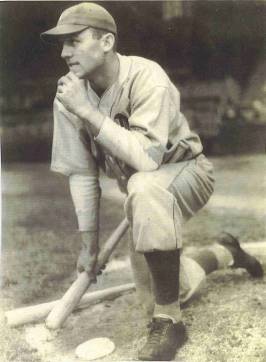
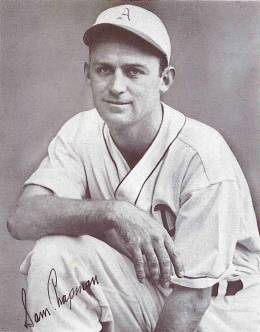
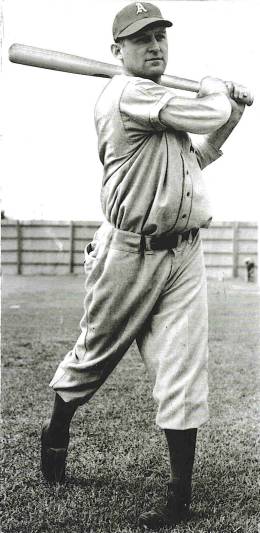
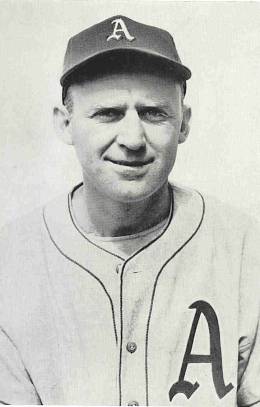
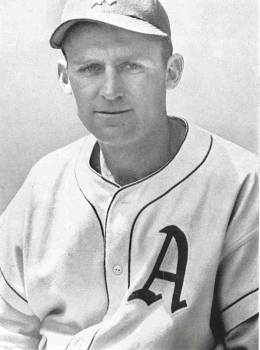
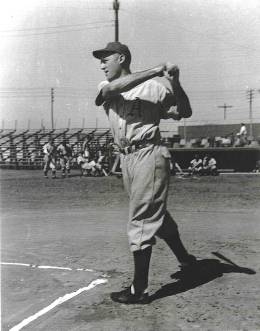
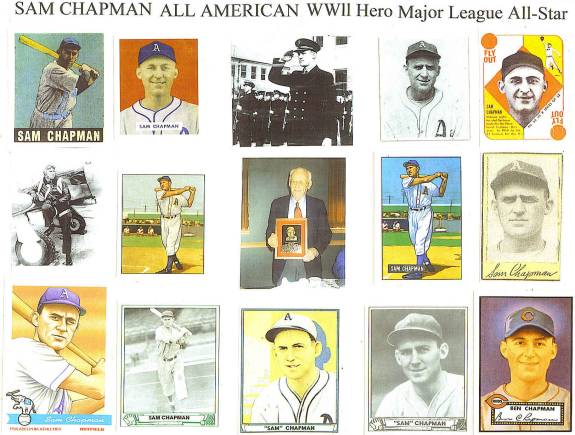
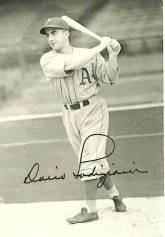
Samual Blake Chapman was born April 11, 1916 in beautiful Tiburon, California, a small Marin County community just north and across the Bay from San Francisco. The Bay Area gave birth to several future major league ball players during this time period, among others, Joe and Dom DiMaggio born in 1914 and 1917 and Dario Lodigiani, also born in 1916. Sam attended the USC in the East Bay. There, he was a popular football standout as an All-American halfback. Connie Mack had been fortunate when Home Run Baker recommended Jimmie Foxx years before. Now it was Ty Cobb who recommended Sam Chapman.
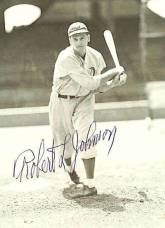
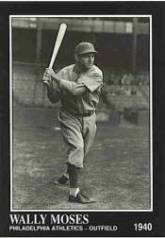
In 1938, Sam went directly from the Cal campus to Philadelphia and, with no minor league experience, the twenty- two year old joined the outfield duo of veterans Wally Moses and Indian Bob Johnson. Over at second base was another rookie, his Bay Area buddy Dario Lodigiani. While Sam hit with power in his rookie season with 17 home runs (second on the club), his batting average was .259. That first year Dario had the edge on Sam with a .280 average. In 1939 Sam switched to center field and saw his average increase to .269. Each year Chapman improved his hitting and by 1940 Sam hit 23 home runs and was hitting .276. It was Sam’s third year playing the outfield with Wally Moses and Bob Johnson. Wally was a consistent .300 hitter and Indian Bob was a constant home run threat and annually hit in 100 or more RBIs.
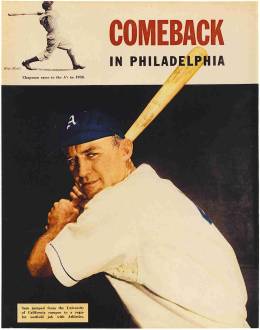
It was 1941, however, that Sam Chapman would have his personal best season and would combine with Moses and Johnson to become one of the best and most popular outfields in any year in A’s history. In 1941 Sam had careerhighs in hits (178), runs (97), home runs (25), doubles (29), triples (9) and batting average (.322). That year Sam led all major league outfielders with 416 putouts and 21 assists. Chapman was 5th in the American League with 300 total bases and 5th in slugging average with .543.
Meanwhile, Moses and Johnson also had good years. The 1941 outfield of Chapman, Moses and Johnson combined to have at least two players to hit 20 or more home runs, 100 or more RBIs and have two players to hit over .300. No other outfield in the 100-year history of the Athletics franchise can make that claim. In the recent Society balloting for All Time A’s Outfielders, three of the top six vote receivers (Chapman, Moses and Johnson) comprised the 1941 Athletics outfield.
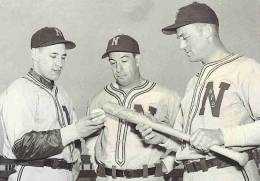
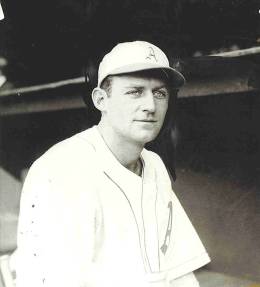
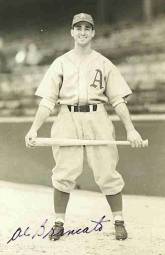
On the other side of the continent from Sam Chapman, Albert Brancato was born May 29, 1919 in Philadelphia. Like Jimmy Dykes before him, Al relished the idea of playing in front of his hometown Philadelphia fans. In 1939, after hitting .280 and driving in 98 RBIs for Williamsport in the Eastern League, Connie Mack brought Al up to the A’s. The twenty-year-old Brancato played 20 games at third base in an infield where Connie often interchanged his second, shortstop and third base positions. The regular third baseman was twenty three-year-old Dario Lodigiani while the center fielder was Sam Chapman, also twenty-three. Eddie Collins Jr. was also trying to make the club. How could Al have imagined upon meeting his teammates that sixty one years later he would be sharing old times with these three teammates and meet the son of the team’s catcher, Frankie Hayes?
While hitting only .206 in 68 at bats, Al showed timely hitting, driving in eight runs with his 14 hits, including his first home run. By 1940 Brancato made the club and shared shortstop duties with Bill Lillard, playing 80 games at shortstop and 10 at second base. While hitting .191, Al had played a solid shortstop, having a fielding average of .949. This percentage was on a level of other American League shortstops and future Hall of Fame players Joe Cronin, Frank Crosetti and Luke Appling. By 1941 Mr. Mack had selected “The Italian” as his everyday shortstop. Only twenty-two, Al took full advantage of this opportunity. He played 139 games at shortstop and missed only 10 games all season. His 144 games played were second only to Bob Johnson. Al had 530 at bats and 124 hits including 20 doubles and two home runs. He tied for the team lead with nine triples and had 49 RBIs while scoring 60 runs. He boosted his average up to .234. Over in the National League, another twenty-two year old, future Hall of Fame player Pee Wee Reese of the Dodgers had hit .229. While his fielding was not on the same level as 1940, he had not been helped by a pitching staff that, with a 4.83 ERA, was the worst in baseball.
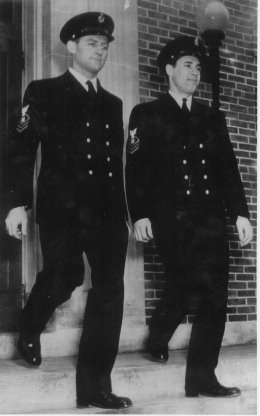
1942 may have brought an even greater year for Sam Chapman and continued progress from Al Brancato. We will never know. From 1942 to 1945, both served in World War II for the United States Navy. There was “bigger picture” than between the lines.
Sam Chapman lost four years of baseball and when he returned, eye problems developed during the war affected his performance through 1948. In 1949 he returned to greatness with a year that came close to matching 1941. Sam ended his career with the ClevelandIndians in 1951. He finished with 1,329 hits, 180 home runs, 773 RBIs and lifetime .266 batting average. He is tied for 4th with Bing Miller for number games played in the A’s outfield over the past 100 years, topped only Rickey Henderson, teammate Bob Johnson and Al Simmons. He is ninth home runs, topped by Philadelphia A’s players Jimmie Foxx, Bob Johnson, Simmons and Gus Zernial.
Al Brancato returned from the service at the end of the 1945 season, just time for Dick Fowler’s no hit game. Now twenty-six, Al played in only games. While Sam Chapman had position on the 1946 team, Al did not. Those 10 games were the last in major league career.Al Brancato finished his career with 199 hits, 4 home runs, 80 RBIs and a career batting average of .214. He continued with baseball in Philadelphia, however, coaching the St. Joseph’s University baseball team for many years.
At 81 years old, Al Brancato looks fit and trim as a man 25 years younger. At 84, Sam Chapman still has a powerful handshake that explains where all those home runs came from. Perhaps, baseball wise, each man peaked in the Summer ’41. Character wise, their service to our country from 1942 to 1945 and gracious men they both are today 2001 would be hard to beat.
Editors Note:
Sam Chapman will be 90 on April 11,2006 we understand plans are in the early stages by the folks in his home town to declare that day, Sam Chapman Day in Tiburon, CA with all sorts of fanfare being considered. We will keep you aprised on the specific details as they become available.
Sam Chapman
By Rich Westcott
To Philadelphia baseball fans old enough to remember when the city was the proud possessor of two major league franchises, the name Sam Chapman holds a special place in the rich sports history of the region.
Chapman was an outfielder with the Philadelphia Athletics. And he was a good one. He roamed the outfield pastures of Shibe Park with the speed and grace of a gazelle. His arm was powerful and accurate. At the plate, he was an excellent hitter who had power and who got his hits when they counted the most.
Chapman’s name doesn’t appear on the A’s long and illustrious list of Hall of Famers. But to A’s fans of the 1940s, he was just as important. In his era, there was no more popular player in Philadelphia.
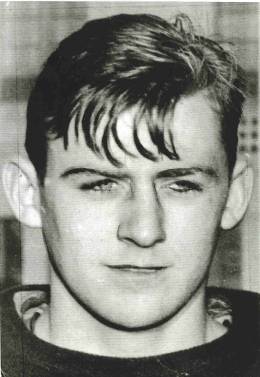
A magic aura always seemed to surround Chapman. In part, it may have been because he was big (6-0, 180 pounds) and strong. He was a handsome man, too, with luminous blue eyes and a thick crop of dark hair.
Chapman had many other strong qualities. He was stalwart. Virile. A gentleman. He was enormously, popular with his teammates. And to youths of the day, he seemed to represent all that was good in baseball.That image was enhanced by the fact that he had been an All-American football player at the University of California and a Navy pilot in World War II. Chapman jumped directly from the college campus to the big leagues, recommended to the A’s Connie Mack by Ty Cobb. His big league tenure extended from 1938 to 1951 with nearly four years knocked out at the peak of his career because of time spent in the military.
Sam wound up playing 11 seasons in the majors, ending his career with the Cleveland Indians. He had a lifetime batting average of .266, which included 1,329 hits in 4,988 at-bats. In 1,368 big league games, Chapman collected 180 home runs and 210 doubles, and drove in 773 runs while scoring 754.
A member of the 1946 American League All-Star team, Chapman reached double figures in home runs nine times. Twice he drove in more than 100 runs. He landed in double figures in doubles 10 times.
A sure-handed outfielder; Chapman led America League fly-catchers in fielding percentages four times, once in 1941 as a left fielder and in 1947, 1949, and 1950 as a center fielder. He also led the league in assists in 1941, and-as high-volume outfielders often do-in errors three times.Chapman’s best season offensively occurred in 1941 when he hit a robust .322. Although Sam’s record was obscured by the legendary feats of Ted Williams and Joe DiMaggio that season, he placed fifth in the league in slugging percentage (.543) and fifth in total bases (300) while hitting a career-high 25 home runs, driving in 106, and scoring 97.
“That year was my proudest achievement in baseball,” said Chapman. “It was my fourth year in the major leagues, and I was just learning to play because I had never had any minor league experience. I hit some home runs and knocked in some runs. It was a good year for me.”
The soft-spoken Chapman still lives in Tiburon, California, the town where he was born and raised. He has been retired for a number of years, but until a recent illness slowed him down, he kept busy playing golf and making furniture.
Chapman worked for 17 years for the state of California in air pollution control in the bay area, utilizing his college training as a chemistry major.
“l really got into something I liked,” he said in an interview several years ago. “Before that, I had been a building contractor, but I ran out of money and had to go back to baseball.”Chapman, who came east several times in recent years, marveled at the way Philadelphia has changed.
“Veterans-Stadium [where he had appeared at an old-timers’ game in 1971] sure isn’t anything like Shibe Park,” he said. “I really enjoyed playing in Shibe Park. It was a good.park, layed out nicely and small enough that you could get a home run in it, but big enough that you couldn’t hit one out all the time. It was good hitters’ park, though.
“Philadelphia was a good baseball town when l played in it,” he added. “The crowds were good. They were for you when you were playing well, and they booed you when you weren’t.
“And it was good playing for Connie Mack. He knew the game very well. He took everything pretty much in stride. He could get mad once in awhile, but most of the time he was pretty easy-going. He gave us as much help as he could. Unfortunately, he didn’t have any money to pay players much.”Mack never saw Chapman play before Sam reported to the A’s late in the spring of 1936.
“Ty Cobb wrote Mr. Mack a letter and told him he ought to sign me,” recalled Chapman. “I have no idea where Cobb saw me play. I n fact, I never even met him until later. Eventually, I got to know him a little. I played some golf with him. He was the meanest man alive. He would throw his clubs, throw his bag. After I went with the A’s, I got three letters from him telling me how to hit.
“Anyway, he wrote to Mr.-Mack about me, and Mr. Mack wrote back and offered me $6,000. The New York Yankees and Cleveland Indians had each offered me $9,000, so I got in touch with Cobb, which was the first time I’d ever talked to him. I asked him what he thought I should do.
“He said to me, `Mr. Mack knows more about baseball than anybody else.’ He said I should sign with him. So I listened to Ty Cobb and signed with the A’s.”
Although there was never any doubt in Chapman’s mind what sport he would pursue as a career, his signing with the A’s ended any speculation about furthering his football career. Chapman had been a standout football player as a youth, but he was always somewhat partial to baseball:
“My favorite team was the old San Francisco Seals,” he said. “Lefty O’Doul, Earl Averill, a few others like that were my favorites. I used to take two ferry boats across the bay and a long streetcar ride to get to the ballpark to watch the Seals play. I didn’t even know they played ball back East.
“In high-school, I was really. small,” Chapman continued. “When I graduated I weighed 138 pounds. I played five varsity sports in high school (football, baseball,- basketball, soccer, and track). My varsity football coach was Roy (Wrong Way] Riegels. He had just started coaching. My dad wanted me to go to sea because he had a job on a tanker. But Riegels sent me over to the University of California to look around. I liked it,, and decided to enroll. I didn’t have a scholarship.”
At Berkeley; Chapman favored football over baseball. Sam had started’ to put on, some pounds by.the time he made the varsity, and it didn’t take long for him to become the team’s star running back. In his senior year, Chapman led Cal to an undefeated, once-tied season and a trip to the Rose Bowl where the Golden Bears defeated Alabama, 13-0.That year, Sam was named first-team All-American as a halfback. The following spring, Chapman was drafted by the Washington Redskins, even though he had already signed a contract with the A’s.
“In Detroit, they were trying to make a trade for me with the A’s and Redskins,” Chapman says. “The idea was for me to go to Detroit and play baseball for the Tigers and football for the Lions. But Mr. Mack said no. A few weeks later, having earned his bachelor’s degree, Chapman joined the As in Cleveland.
“I was a shortstop and a second baseman at Cal,” Sam said. “Never played anything else. When I got to Cleveland, I went to see Mr. Mack the next. morning. He said, ‘Oh, you’re the lefthanded outfielder from California.’ I said. ‘No sir, I’m the righthanded shortstop.’ He said, ‘Well, you’re playing center field today.’
“I was scared to death. The only outfield I had ever played was a little bit in semipro ball. But I went out there, and in the first game I did pretty well for a while. I had no chances until the seventh inning when I got a high pop fly. They had given me some sunglasses, but I had never worn that kind before. I was flipping them up and flipping them down, trying to see the ball. It finally came down and almost hit me in the head. I picked it up and threw it 10 feet high into the stands. When I came back to the bench, Mr. Mack said.’Don’t worry; Sam, you showed you have a good arm.'”I didn’t get any hits that day,” he adds. “But I did hit a line drive that hit the pitcher on the knee. After that, he knocked me down every time I came to the plate.
“I was kind-of awed by it all,” Chapman said of his big league surroundings. “I had never been out of the little town in which I was born except to travel with the football team.”
In Chapman’s rookie year in 1938, he hit .259 with 17 home runs and 63 RBI while playing in 114 games, mostly in left field. The following year, he hit .269 with 15 homers and 64 RBI while moving to center field.
“I worked very hard to learn to play center,” Chapman remembered. “I had two guys to help me. Bob Johnson was in left field and Wally Moses was in right. They were both getting older and didn’t want to run too much. So, Mr. Mack put me between them.”
Chapman stayed in center field until the 1946 season when he moved back to left to make room in center for the newly acquired McCosky. A back injury, however, eventually forced McCosky to switch to left with Sam returning to center to anchor an outfield that also included Elmer Valo in right.Although he was still learning the game as the pros played it, Chapman had several noteworthy accomplishments in 1939. He hit for the cycle in five at-bats in a game against the St. Louis Browns. The next day, he hit two more home runs.
Chapman upped his batting average to .276, his home run total to 23 and his RBI count to 75 in 1940. Sam also led the league in strikeouts with 96. But he was becoming an increasingly polished player, even though his individual performance was not reflected in the A’s position in the standings.
The A’s of the late 1930s and early 1940s were a woebegone team. Having steadily declined from their great teams of the 1929-31 era, the A’s finished in last place every season between 1935 and 1946 except in 1937, 1939, and 1944. Right before World ‘War II, the club had some fine, although aging players in first baseman Dick Siebert, catcher Frankie Hayes, Moses and the man known as Indian Bob Johnson. But it always lacked pitching and battled annually with the equally lowly B’rowns and Washington Senators to see who would scrape the bottom of the American League standings.Chapman, however, was like a burst of cool air on a sultry mid-summer night. Young, swift, and talented, he was quickly becoming not only the big star in A small galaxy of Philadelphia baseball luminaries, he was also regarded as one of the up-and-coming stars of the American League.
The 1941 season-confirmed the path of Chapman’s ascension. Aithough the As were dead last, Sam’s magnificent .322-25-106 season clearly demonstrated that he belonged among the elite residents of the league.
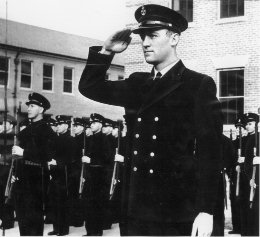
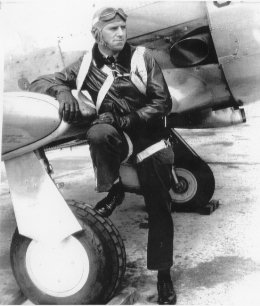
But just when Chapman’s star had begun to shine so brightly, World War II came along to snuff it out. Chapman enlisted in the Navy at the end of 1941. Sam earned his commission, then trained as a bomber pilot. Later, he switched to piloting fighter planes. Although he saw no action overseas, he_spent nearly four years at the peak of his baseball career helping to protect the borders of his country from enemy attack.Although, he was never again the same player he had been, Chapman has no regrets about the sabotage the war did to his.baseball career.”I was very happy to be flying,” he said. “I enjoyed that immensely. It was hard to miss that much time [in baseball] and then come back. But I don’t really have any regrets.”
Chapman returned to the A’s-for the last two weeks of the 1945 season. After three days of practice, he entered the starting lineup, and appeared .in nine games, hitting just .200.
The following-year, though, he was back to full-time duty. Sam hit .261 with 20 home runs and 67 RBI. He was named to the American League All-Star team and went hitless in two trips to the plate in his team’s 12-0 route of the National League. And in August, he led the last place A’s to a stunning 5-3 victory over the pennant-bound Boston Red Sox with three home runs at Shibe Park.
“I think the All-Star selection was probably, the result of my good year before I went into the service,” said the ever-modest Chapman. “That year, though, was a very special time. The fans were great. They applauded everybody. It took a while for the players to get back into the swing of things,but it was a grand year. It was good to be back.”
Chapman went .252-14-83 in 1947. Meanwhile, the A’s were beginning to shed the shackles that had bound them to the pits of the American League standings. In 1947,they climbed all the way to fifth place, their highest finlsh since 1934. In 1948, they joined in a torrid, five-team battle with the Indians, Red Sox; Yankees, and Tigers for the pennant.
The A’s held first place briefy in August; but were ultimately knocked off that perch in a doubleheader loss to Cleveland. They finally finished 12 1/2 games behind the lndlans, who defeated the Red Sox in a one-game playoff for the pennant after the two had finished the regular season in a tie.
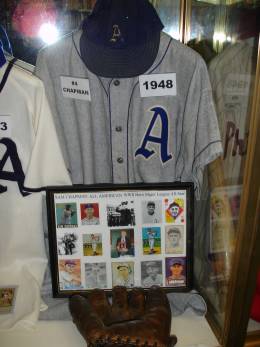
Chapman, who went .258-13-70 for the year, was surrounded by a cast of: excellent players. McCosky (.326), third baseman Hank Majeski (.310) and Valo (.305) led the team in hitting with future batting champion Ferris Fain (.281), . Buddy Rosar (.255), Joost (.250) and Pete Suder (.241) rounded out a strong starting lineup that was as good defensively as it was on offense.
“The problem was, we didn’t have enough pitchers,” Chapman said. “We had seven or eight, but most teams had 10 or 11. We had no depth, although we had some good pitchers such as Dick Fowler, (15 wins], Joe Coleman, Lou Brissie, Carl Scheib [each with 14 wins), and Phil Marchildon (nine).”
The 1948 season turned out to be the A’s last big season in Philadelphia: The team slipped to fifth in 1949,and then sank back into the lower layers of the American League (except. when it finished fourth in 1952) before starting a journey after the 1954 season that wouId take it first to Kansas City, and then to Oakiand where it now resides with little acknowledgement of its roots.
Chapman hit.278 with 24 home runs and a career-high 108 RBI in 1949. He followed that with a .251-23-95 year in 1950.
Early in the 1951 season, the A’s shipped Sam to Cleveland for outfielder Allie Clark, and infielder Lou Klein in a trade that proved little benefit to the A’s because neither Clark nor Klein contributed much of anything, and both were gone from the big leagues soon afterward.
Just one week earlier, however, the A’s had landed outfielders Gus Zernial and Dave Philley in a mammoth three-team trade with the Indians and Chicago White Sox: The deal made Chapman expendable and effectively put him out of a job in Philadelphia.
“I was kind of disappointed when it happened,” Sam said. “Cleveland thought it had a chance to win the pennant and wanted to get me for some extra hitting. That was the on[y reason I was happy about the trade, even though as it turned out, we finished second and didn’t win the pennant.”
Chapman played in 94 games with the Indians, batting 228. At the end of the season; he decided that he’d had enough.
“I could’ve gone back to Cleveland in 1952, but I had three children by then,” he said. “I was always traveling. I figured it was time to get out.”
Chapman returned to California, and went into the building contracting business. But a shortage of cash forced him back into baseball. Getting his first exposure to the minor leagues, Sam spent three years playing in the Pacific Coast League, ironically with Oakland. He hit .263 as a regular in both 1952 and 1953, and .290 in 1954.
Chapman bowed out of baseball for good after the 1954 season. When he left, he took with him some fond memories of having played in an era that was as exciting as any in baseball history.
“It was a real good time to play baseball,” Chapman said. “Everybody was enthusiastic. It was fun, and I enjoyed it very much. I wasn’t as successful, as I’d have liked, except for that one year. But I have no complaints. I liked playing baseball in Philadelphia very much.”Philadelphians liked the way Sam Chapman played his baseball, too. He did it with grace and with style. He had an abundance of talent. And he was a player who people of all ages looked up to.
In the long history of Philadelphia baseball, few players enjoyed such a loyal and enthusiastic following as the former A’s outfielder. He was a very special player and a very special person.
_______________
Rich Westcott saw his first major league game in 1946 on the day that Chapman hit three home runs to lead the Athletics to a 5-3 victory over the Red Sox. He still has a vivid recollection of that game, which also included a home run by Pete Suder with Luther Knerr getting the win. Westcott is the former editor and publisher of Phillies Report and the author of 17 books, including most recently Mickey Vernon – The Gentleman First Baseman. The above article appeared in another of his books, Masters of the Diamond.
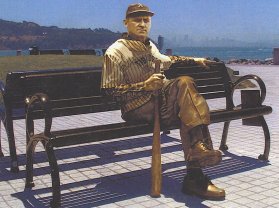
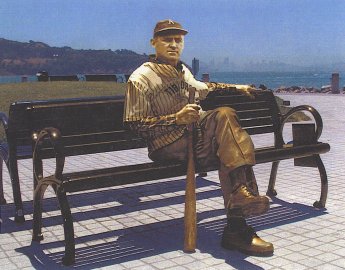
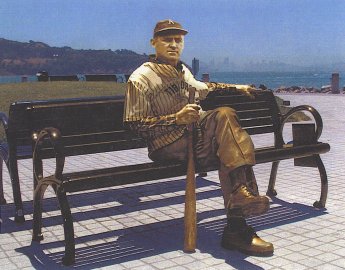
The Sam Chapman Statue
‘TIBURON TERROR’: An artist’s rendering depicts a proposed statue of Sam Chapman on a bench at the Tiburon Ferry Plaza. Chapman, a Tiburon native, was a football and baseball stat at Tamalpais High School and the University of California at Berkley in the 1030s before an 11-year career in Major League Baseball.
Sam Chapman was not only an outstanding college & professional athlete, he is also a World War ll veteran who joined the armed forces early in our country’s struggle to maintain our freedom and in the process gave up what would have been his most productive years as a professional athlete. Join the citizens of Tiburon, CA. in their quest to erect a statue to this great American hero by sending in your contributions as described in the letter below.
SEND YOUR CONTRIBUTIONS TO:
THE SAM CHAPMAN STATUE FUND
c/o TIBURON PENINSULA FOUNDATION
P. O. BOX 210
TIBURON, CA 94920