Connie Mack’s First Book
 by Bob Warrington
Most Philadelphia A’s fans are aware of two books “authored” by Connie Mack late in his life—“My 66 Years in the Big Leagues” and “Connie Mack’s Baseball Book.” I put quotation marks around the word “authored” because it is generally believed that the books were ghost-written, perhaps by Richard S. (Dick) Armstrong, the A’s Director of Public Relations when the books were published in 1950. Mack offered reminiscences for the book, but somebody else probably provided the words.
Less well known is a book written by Connie Mack that was published in 1903 in Philadelphia by Drexel Biddle Press, “How to Play Baseball.” According to the preface, “The present book is designed to cover not only the way to play baseball and how different positions should be filled, but to offer suggestions as to the proper methods of training and practice.”
The 169-page book contains far more than basic instructions on playing the game of baseball. It provides insights into Mack’s managerial philosophy at an early point in his career, and it offers his commentary on other issues pertaining to the state of baseball as it existed at the dawn of the 20th century. Unlike the 1950 books, Mack’s 1903 book probably represents his words as well as his thinking.
Clearly, one purpose of the book was to publicize the American League’s (AL’s) newly-won recognition as a major league circuit. When the AL was formed in 1901 and proclaimed its major league status, the National League (NL)—the existing major league—refused to recognize the claim. A highly destructive “war” ensued between the two leagues as the AL sought to demonstrate its credibility by raiding players off the rosters of NL teams, and the NL attempted to prevent established players from joining the upstart league.
The NL, weary of the fight, losing money, and aghast at the number of NL players lost to the siren’s call of fatter paychecks in the AL, sought a “peace agreement” to end the “war.” A National Agreement was concluded in January 1903, in which the NL acknowledged the major league status of the AL. In his book, published on the heels of that agreement, Mack gleefully describes the conditions under which “the once haughty NL petitioned (Ban) Johnson (the AL President) to end the base-ball war.” A highly-laudatory biographic sketch of Johnson can also be found at the beginning of the text.
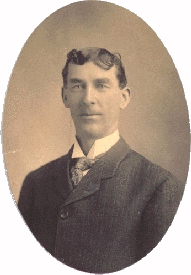
The 1903 publication of the book was also intended to capitalize on the Athletics’ AL championship in the 1902 baseball season. Mack’s talents as a baseball manager were applauded following the A’s success given the particularly adverse circumstances the team faced during the 1902 season. The City of Philadelphia and its citizens rejoiced at the A’s triumph. An enormous parade was held in their honor in downtown Philadelphia with over 350 clubs and organizations sending bands and marchers to participate. Consequently, it’s not surprising that a publisher based in Philadelphia would regard a book authored by Mack on how to play baseball as a highly marketable commodity. Mack is pictured opposite the title page with the caption, “Connie Mack, The popular manager of the Athletics (A.L.) Club. Champions for the season of 1902.” By contrast, the Philadelphia Phillies, who had been in existence for almost 20 years, were still looking for their first NL pennant.
In terms of his managerial philosophy, Mack asserts in the book that the most important attribute of any good baseball player is his brain. While Mack acknowledges that strength and speed are important, “they must be controlled by a superior power, which is the brain.” He praises college men who “by the use of their head, rather than strength or speed, are successful.” Mack employed this approach in recruiting college-educated men for his 1902 AL championship team. He was not averse, however, to securing the talents of dim-witted roustabouts if he thought they could help his team win. A look at the 1902 A’s roster finds men with college degrees and those without high school diplomas. His skill at blending different personalities into winning teams, motivating players to give their all for the club, and using talent to its greatest effect on the diamond were just some of the signs of the unmistakable genius Mack brought to the game of baseball.
However, in describing how to play certain positions, it’s clear Mack’s thoughts are based on how baseball was played in the fast-fading 19th century rather than how it was evolving in the newly-emerging 20th century. In describing how to play the catcher’s position, Mack, a former catcher himself, recommends, “When a catcher takes his position the body should be well bent forward from the hips so as to enable the player to handle the ball at any height. Crouching to the ground should be avoided. As a player who insists on so doing will never become a first-class catcher.” In the 19th century, catchers like Mack bent over at the hips and stood well behind the batter. As the 20th century progressed, catchers quickly came to play the position—a crouched stance closely behind the batter—in exactly the way that Mack opposed.
Two other segments of the book are worth mentioning. George Edward “Rube” Waddell contributed a chapter on “The Art of Pitching.” Waddell had an incredible 1902 season, notching a 24-7 record, 210 strikeouts. and a 2.05 ERA despite not having joined the team until June. In his chapter, Waddell attributes his success to his mastery of different pitches. He names his best pitch as a “fast inshoot” and advises pitchers to use the “curve ball” sparingly to avoid arm trouble. Barely literate, it’s highly doubtful Waddell actually composed the chapter on pitching, and instead relied on someone else to turn his thoughts into written prose.
Second, a lengthy chapter on “The History of Baseball” through 1902 can be found in the book, as can numerous photos of baseball players and officials from the era. Mack generously includes numerous Phillies’ photos in the book, which may have been intended by the publisher to expand the book’s appeal to that team’s fans. In addition, players from the 1902 AL champion Athletics and 1883 American Association champion Athletics are also pictured. The chapter traces the origins of the game from before the Civil War and looks at the famous teams and various leagues that represented the sport in the mid-to-late 19th century. Noteworthy personalities—both players and officials—are mentioned. The chapter contains lots of interesting historical tidbits.
Connie Mack’s “How to Play Baseball” is rarely found today, and obtaining a copy will be difficult. It’s not clear how many copies were published initially. There is no evidence to indicate that subsequent editions of the book were produced or if it was republished at a later date. Nevertheless, the book is well worth having for those with an interest in the history of baseball, the Philadelphia Athletics, or the legendary career of Connie Mack.